|
Stafford Fusion Lab
|
|
|
Researching the future
|
|
|
|
|
|
Diagnostics
The magnetic diagnostics will be made up of fourteen flux loops, fourteen mirnov coils and one plasma rogowski coil, there will also be coil current rogowski coils located on the capacitor bank transmission lines.
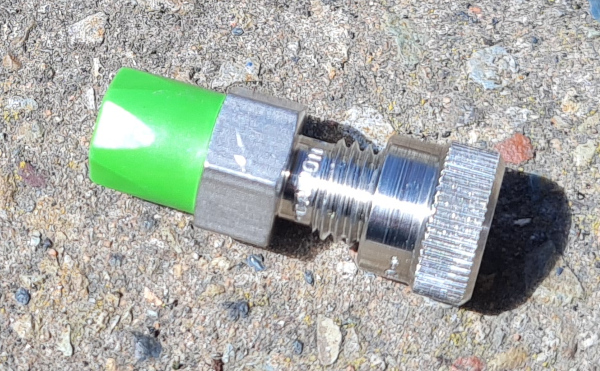
A retractable magnetic probe will be mounted in the top of the vacuum vessel, the windings will be inside a 3.2mm stainless steel tube and it will use a Cajon Swagelok SS-2-UT-1-2BT Ultra-Torr vacuum fitting shown below:
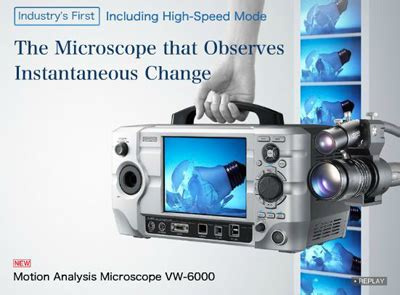
The 316L stainless steel vacuum chamber will have two 6 inch glass port holes one of which will be used for high speed filming of the plasma using a Keyence VW-6000 camera similar to the one shown below:
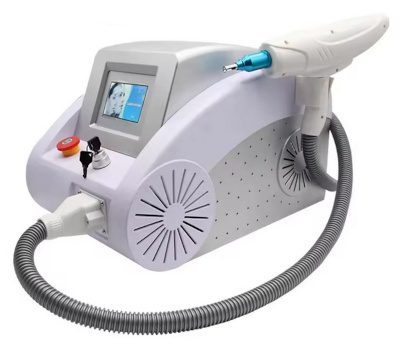
To measure the temperature of the tokamak a Thomson scattering diagnostic will be used, this will use a 3 Joule Q-Switched Nd:YAG laser (Zang et al., 2007) with a pulse width of approximately 8nS, the laser to be used is shown below, shown with the 532nm tip attached (the 1064nm tip will be used for the Thomson scattering diagnostic):
It has been confirmed by using the foot switch to drive a relay to switch both the laser and an LED and recording video at 960fps that after being powered on with the only setting change being the power level being increased to 3 Joule (3000 mJ) the time between triggering the laser and the laser pulse occurring is the same every time, so with the default repeat set to 6Hz (0.1666 Seconds between pulses), the time to the first pulse is 0.1585 (or 1 frame less due to jitter when recording at 960fps). If the laser isn't turned off and on between triggering then the time to the laser pulse occurring becomes random and is presumably synchonised with the first pulse. This repeatability means that the exact time to measure the temperature during each operation of the tokamak can be selected in advance.
The polychromator required for the Thomson scattering diagnostic is a work in progress and will use an XC7A15TFTG256-3 FPGA connected to an ADC3549 500MSPS analogue to digital converter using a silicon avalanche photodiode, most Thomson scattering diagnostic polychromators used with tokamaks use a 3mm diameter silicon avalanche photodiode which means the response rate of the photodiode is a bit slow for the pulse width of the Q-Switched laser, so a smaller, faster photodiode will be used with suitable optics (Lee et al., 2012) to focus the band filtered light on to an APD500NM4-0-02 (AGE Optoelectronics, 2026) 0.5mm diameter silicon avalanche photodiode.
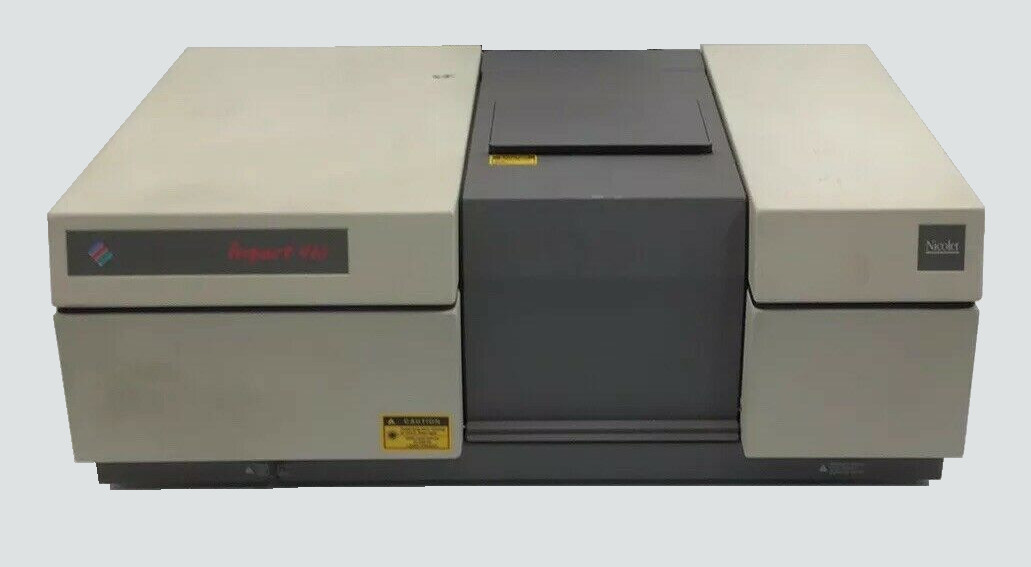
The gas in the tokamak will be pumped into a gas cell at the end of each test run. A Nicolet Impact 410 spectrometer similar to the one below will then be used to analyse the gas.
References
AGE Optoelectronics (2026). Data sheet for APD500NM4-0-02 Avalanche Photodiode
Lee, J. et al (2012). Conceptual design of new polychromator on Thomson scattering system to measure Zeff Rev. Sci Instrum. 83, 10E334 (2012) https://doi.org/10.1063/1.4733737
Zang, Q. et al (2007). Raman calibration of the HT-7 yttrium aluminum garnet Thomson scattering for electron density measurements. Rev. Sci. Instrum. 78, 113506 (2007) https://doi.org/10.1063/1.2813895
Any enquiries should be directed to: admin @ staffordfusionlab.co.uk